

When Hannah’s Car Started Shifting Hard, She Chose the Best Auto Repair Shop Webster Texas for Transmission Repair
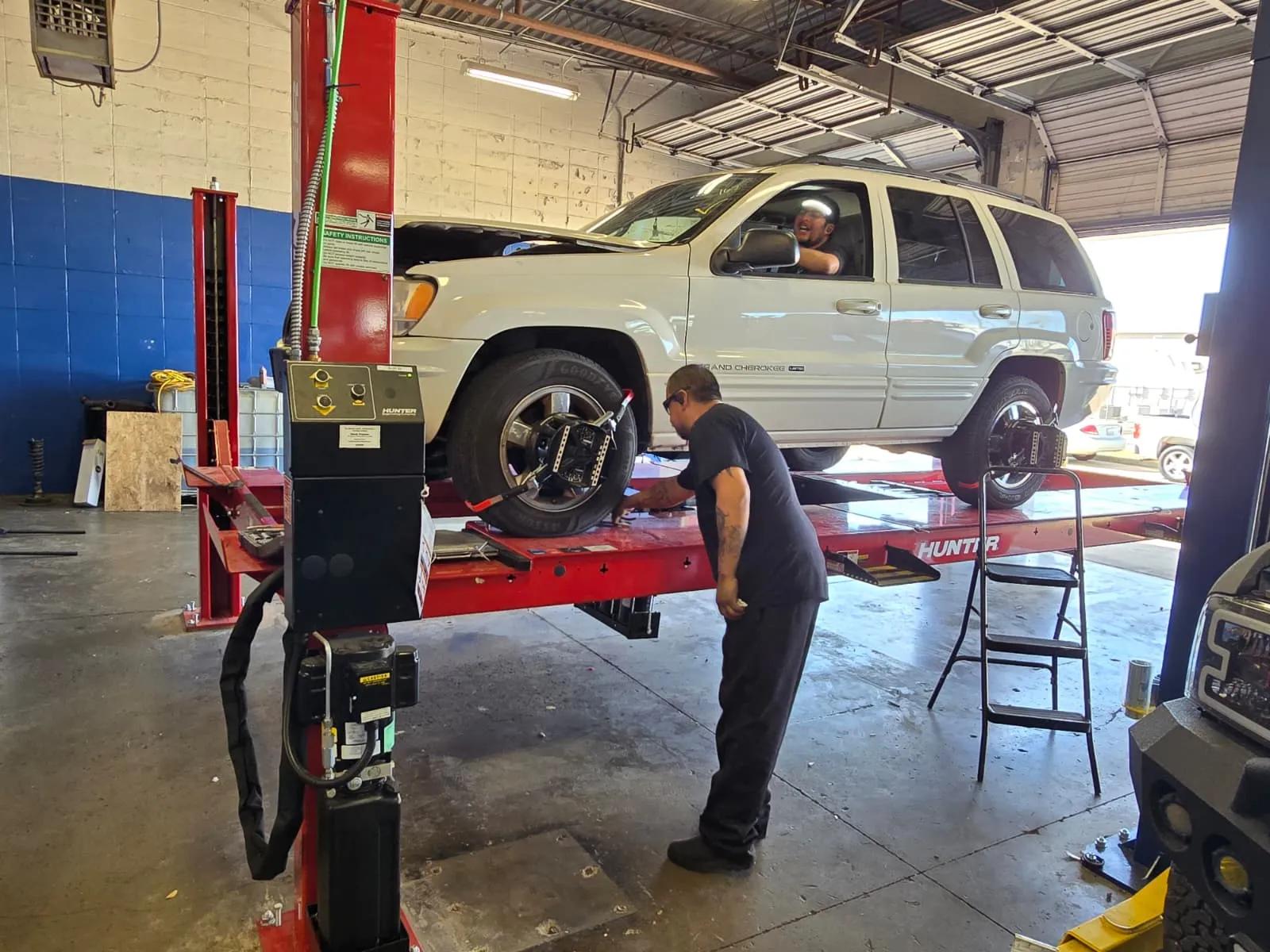
Transmission Repair Service in Webster, Texas
Quick Answer
A transmission that shifts hard, jerks between gears, or hesitates before engaging usually points to degraded transmission fluid, a failing shift solenoid, or a sensor issue, and not necessarily a transmission that needs replacing. In Webster, Texas, Hannah noticed her car shifting harder than usual between first and second gear, and a proper diagnostic found the fluid had broken down and one shift solenoid was failing, well short of the transmission itself needing replacement. That distinction is exactly what a real Best Auto Repair Shop Webster Texas drivers count on gets right before recommending any repair.
When Hannah Noticed the Shifts Getting Rough
Hannah sells homes around Webster, which means her car is where a lot of her workday happens, between showings, client meetings, and open houses.
She first noticed it pulling out of a client's driveway: the shift from first to second gear landed with a jolt instead of the smooth transition she was used to. She figured it might just be how the car felt that day.
By the end of the week, it wasn't occasional anymore. Almost every shift under light acceleration had that same hard, jerky feel, and once she noticed it, she couldn't stop noticing it.
A transmission acting up is the kind of problem that makes drivers nervous, mostly because "transmission" so often gets associated with an expensive replacement. Hannah wanted an actual answer before assuming the worst.
A Call That Didn't Jump to Worst-Case
Hannah called and spoke with Eric on the customer care line.
Eric didn't lead with a worst-case estimate. He asked when the hard shifting happened under light acceleration, hard acceleration, or both whether there was any delay before the car engaged into gear, any warning lights, and roughly how many miles were on the transmission fluid.
Hannah explained it happened mostly during normal, light acceleration and that she couldn't remember the last time the fluid had been serviced.
Eric said that combination was worth checking properly before assuming anything serious, since fluid condition alone can cause exactly what she was describing. He booked her in for a full transmission diagnostic rather than guessing over the phone.
Diagnosing Before Assuming the Worst
When Hannah's car came in, technician Adam started with a diagnostic scan and a fluid check rather than assuming internal damage. Hard shifting can come from more than one source, so he checked:
Transmission fluid level, colour, and smell
Scan tool codes related to shift timing and solenoid function
Individual shift solenoid response under testing
Shift pattern behaviour across gears during a test drive
Signs of metal contamination or burnt fluid, which point to deeper wear
He also asked Hannah whether the hard shift happened at a consistent point, since a repeatable pattern usually points to a specific solenoid or sensor rather than general wear.
What the Inspection Found
The transmission fluid had darkened and broken down well past its normal service interval, and diagnostic testing showed one shift solenoid wasn't responding the way it should, causing the rough, delayed engagement Hannah was feeling between gears.
There was no metal contamination in the fluid and no scan codes pointing to internal mechanical wear. The transmission itself was intact; it was the fluid and one solenoid causing the problem.
That distinction mattered. A worn-out transmission and a failing solenoid with old fluid can feel almost identical from the driver's seat, but they're entirely different repairs, and only a proper diagnostic tells them apart.
Completing the Transmission Repair
Adam performed a full transmission fluid and filter service to remove the degraded fluid, then replaced the failing shift solenoid. The Transmission Repair Service in Webster, Texas included a relearn procedure afterward, so the transmission's control module could recalibrate to the new solenoid and fresh fluid.
Adam road-tested the car through the same light-acceleration conditions Hannah had described, confirming the shift from first to second, and through the following gears, had gone back to smooth and consistent before handing the keys back.
Why Hard Shifting Isn't Always a New Transmission
Hard shifting gets assumed to mean a transmission replacement more often than it should. A real Best Auto Repair Shop Webster Texas trusts checks the actual cause before recommending anything that drastic. Here's what's usually behind it:
Degraded transmission fluid. Fluid that's gone too long without a change loses its ability to lubricate and transfer hydraulic pressure properly, which shows up directly as rough or delayed shifts.
A failing shift solenoid. Solenoids control when and how the transmission shifts gears. When one starts failing, shifts at that specific gear change can feel hard, delayed, or jerky, even though the rest of the transmission is fine.
Sensor or control module issues. Modern transmissions rely on sensors to time shifts correctly. A faulty sensor can cause hard or mistimed shifts without any physical damage inside the transmission.
Internal mechanical wear. This is the less common but more serious cause — worn clutch packs or bands inside the transmission itself, usually accompanied by metal contamination in the fluid or a broader pattern of slipping, not just hard shifts at one point.
What To Do If Your Transmission Shifts Hard
If your transmission is shifting harder, later, or rougher than usual, a few observations can help a technician diagnose it faster:
Does it happen at a specific gear change, or across all gears?
Does it happen under light acceleration, hard acceleration, or both?
Any delay before the car engages into drive or reverse?
Any warning lights, especially a check engine or transmission light?
Do you know roughly when the transmission fluid was last serviced?
Avoid driving aggressively to "test" whether it gets worse. Have it checked so you know whether it's a fluid and solenoid issue or something that needs closer attention.
Frequently Asked Questions
Question : 1 — Why is my transmission shifting hard?
Answer : 1 Hard shifting is most often caused by degraded transmission fluid, a failing shift solenoid, or a sensor issue. Internal mechanical wear is possible but far less common, and a diagnostic is the only way to tell which one is happening.
Question : 2 — Does hard shifting always mean I need a new transmission?
Answer : 2 No. Many cases of hard shifting come from fluid condition or a single failing solenoid, both of which are far less involved than a transmission replacement. A proper diagnostic identifies the actual cause before any major repair is recommended.
Question : 3 — Can a fluid service fix hard shifting on its own?
Answer : 3 Sometimes. If degraded fluid is the main cause, a fluid and filter service can resolve it. If a solenoid or sensor has also failed, the fluid service alone won't fully fix the shift, which is why both are checked together.
Final Thoughts
Hannah's transmission trouble started as one rough shift she almost didn't think twice about. By the time she called, it was happening on nearly every drive.
Getting it diagnosed properly, rather than assuming the worst, was what turned a feared transmission replacement into a fluid and solenoid service that had her car shifting smoothly again.
For drivers in Webster noticing hard or rough shifts, Bay Area Auto takes that same diagnose-first approach that got Hannah's transmission working the way it should, without an unnecessary replacement.
📞 Call us: +1 346-447-7171
🌐 Visit: https://bayarea-auto.com/
📍 Address: 301 W Bay Area Blvd, Webster, TX 77598, United States
Our support team is available Monday through Saturday, 7:30 AM to 6:00 PM, to assist you quickly and efficiently.
Visit Bay Area Auto or call ahead for a professional transmission diagnostic.