

Adrian's Car Took a Hit During a Highway Drive So He Looked for the Best Auto Repair Shop for Collision Repair Service in Webster, Texas
Best Auto Repair Shop Webster Texas
When Adrian's Steering Wheel Sat Crooked
Adrian works as a freelance videographer out of Webster, and a good part of his week is spent on the highway, hauling camera gear to shoots along the coast and back.
It happened on the drive home from one of those shoots. A car merging from the right drifted into his lane, and before he could do much about it, the two vehicles scraped along each other's sides. Adrian held the wheel steady, eased onto the shoulder, and sat for a moment with both hands still gripping it, heart pounding.
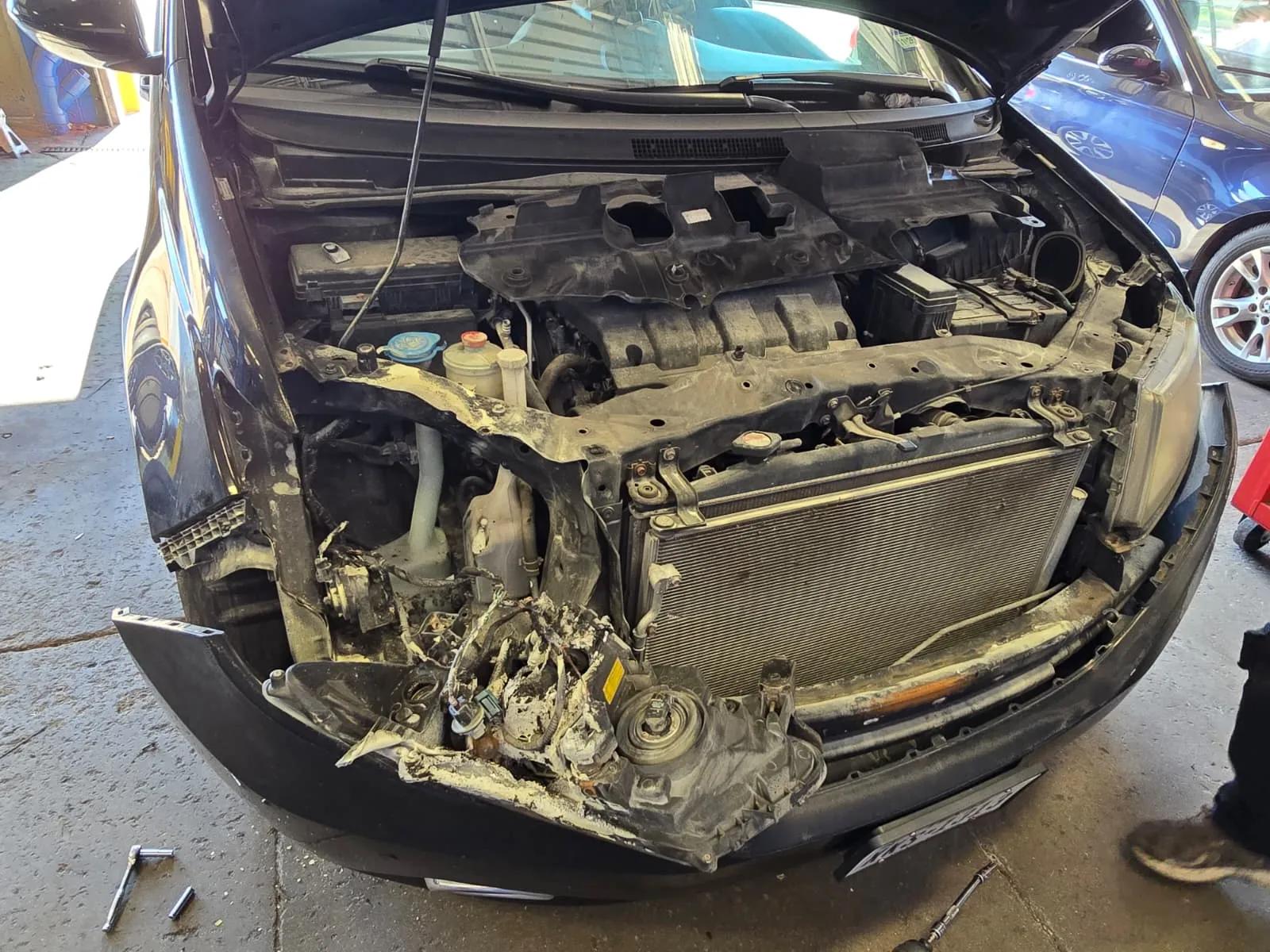
The other driver pulled over behind him, apologetic and shaken. They traded insurance information and photos. The damage Adrian could see was the front fender on his passenger side, crumpled along its edge, and a deep scuff across the front wheel.
The car was drivable, so he pulled back into traffic. That was when he noticed the part no photo captured: his steering wheel sat noticeably crooked while the car tracked straight, and it drifted gently to the right whenever he loosened his grip. Nothing had felt like that before the hit.
Quick Answer: Hidden Damage After Highway Impact
After a highway sideswipe, the crumpled fender is usually the smallest part of the problem the steering and suspension parts behind it can bend without any visible sign, and only an inspection with alignment readings reveals them. In Webster, Texas, Adrian's car was sideswiped at highway speed, and although the visible damage was a fender and a scuffed wheel, his steering wheel sat crooked and the car drifted afterward. A full inspection found a bent tie rod and control arm on the impact side, with the frame intact. Looking past the body panels to the parts that steer and support the car is exactly what a real Best Auto Repair Shop Webster Texas drivers count on does after a hit at speed.
Key facts at a glance:
What happened: sideswipe at highway speed, damaging the front fender and wheel on one side
The warning sign: steering wheel off-center and the car drifting after the impact
Hidden damage found: bent tie rod and control arm, neither visible from outside
What was confirmed: frame within specification, so the repair stayed at the parts level
After the repair: new parts, wheel alignment, panel repair and paint blend, and sensor recalibration on vehicles equipped with them
A Call That Asked About Steering
Adrian called the next morning and spoke with Eric on the customer care line, describing the sideswipe and the fender damage first.
Eric's questions went past the bodywork. Was the steering wheel centered when driving straight? Did the car pull to one side? Any new noises from the front wheels, or any warning lights, including blind-spot or driver-assist indicators? Had he kept driving on it since the accident?
Adrian explained the crooked wheel and the rightward drift, that a blind-spot warning light had come on, and that he'd only made the short drive home.
Eric told him that steering that feels different after a side impact is worth taking seriously, because the parts that control it can bend without any outward sign. He suggested keeping any driving to a minimum until the car was inspected, and booked Adrian in for a full post-collision inspection within the next couple of days.
Inspecting Beyond the Crumpled Fender
When Adrian's car came in, technician Adam started with what the steering was telling him rather than what the fender looked like. With the car on the lift and on the alignment rack, he checked:
Alignment readings on all four wheels, compared with factory specifications
Tie rods and steering linkage on the impact side
Control arms and mounting points for bending or movement
The damaged wheel and tire for bends, bulges, or sidewall damage
Frame and structural points, measured against factory specifications
Stored diagnostic codes for blind-spot and driver-assist systems
He also asked Adrian to describe the moment of impact as closely as he could, since the angle and force of a sideswipe help show which parts are most likely to have absorbed the hit.
What the Suspension Check Actually Found
The alignment readings told the story before any part was removed: the front wheel on the impact side was well out of specification, far more than normal wear would explain.
Closer inspection found the tie rod on that side was bent, and the lower control arm had shifted from its normal position. Neither part was visible from the outside, and neither would have been caught by looking at the fender. The wheel itself was also damaged beyond a cosmetic scuff, with a bend that made it unsafe to reuse.
The frame measurements came back within factory tolerance, which was the most reassuring finding of the visit. The impact had damaged parts attached to the structure without moving the structure itself, so the repair could stay at the parts level rather than becoming a structural job.
The diagnostic scan also confirmed the blind-spot warning light was connected to a sensor that had shifted with the fender.
Completing the Repair and Recalibrating Sensors
Adam replaced the bent tie rod and control arm, installed a new wheel and tire, and replaced the crumpled fender, then blended fresh paint into the surrounding panels so the color carried evenly from door to bumper. Once the suspension parts were in place, he performed a full four-wheel alignment, since new steering parts always need to be set to specification.
The last step was recalibrating the blind-spot sensor so it read the road correctly from its new mounting position. Adam then drove the car on the highway, the same kind of road where the crash had happened, and confirmed the steering wheel sat straight and the car tracked without drifting.
Best Auto Repair Shop Webster Texas
A hit at highway speed carries far more force than most low-speed impacts, and that force travels through parts a driver can't see. A real Best Auto Repair Shop Webster Texas trusts looks beyond the body panels to the parts that steer and support the car. Here's what that inspection is built to catch:
Bent steering parts. Tie rods and steering linkage can bend in a side impact without any outward sign, and they show up as a crooked steering wheel or a pull to one side.
Displaced suspension parts. Control arms and their mounting points can shift under impact, throwing alignment out of specification even when the wheel itself looks fine.
Wheel and tire damage. A wheel that looks merely scuffed can be bent or cracked underneath, and a damaged tire sidewall can fail later without warning.
Shifted sensors. Blind-spot and driver-assist sensors sit in bumpers and fenders, and a repair that moves them without recalibration can leave those systems reading the road incorrectly.
What To Do After a Highway Hit
If your car takes an impact at highway speed, a few steps matter beyond collecting the other driver's information:
Photograph the damage and the scene before moving, if it is safe to do so
Note whether the steering wheel is cantered when driving straight
Notice any pull to one side, new noises, or warning lights
Keep any driving to a minimum until the car has been inspected
Ask for a full inspection, not just a cosmetic estimate
A car that drives fine in a straight line can still hide damage that affects steering and tire wear over time, which is why the inspection matters even when the visible damage looks modest.
Once the hidden damage is identified and the frame is confirmed intact, a professional Collision Repair Service in Webster, Texas repairs damaged panels, replaces bent components, restores proper wheel alignment, and verifies sensor operation before the car is safely returned to the road.
Frequently Asked Questions About Highway Collisions
Question : 1 — Why does my steering feel off after a side impact? Answer : 1 A side impact can bend tie rods, shift control arms, or knock the wheel out of alignment, all of which change how the car steers. A crooked steering wheel or a drift to one side after a collision is a reason to have the front end inspected.
Question : 2 — Can a collision bend suspension parts without visible damage? Answer : 2 Yes. Steering and suspension parts sit behind the fender and wheel, so they can be bent while the outside looks only modestly damaged. Alignment readings and a hands-on inspection are what reveal it.
Question : 3 — Do sensors need recalibration after collision repair? Answer : 3 On vehicles equipped with blind-spot or driver-assist sensors, repairs to the bumper or fender can shift a sensor's position. Recalibration confirms it reads the road correctly afterward, and your owner's manual or a technician can confirm whether your vehicle needs it.
Summary: Check Steering Before Cosmetic Repairs
After a highway-speed side impact, the visible panel damage is often smaller than the hidden damage behind it.
A crooked steering wheel or a drift to one side is the signal to inspect steering and suspension parts.
Alignment readings and a frame measurement separate parts-level repairs from structural ones.
In Adrian's case, a bent tie rod and control arm explained the drift, the frame was intact, and the repair included alignment and sensor recalibration.
About this information: This walkthrough reflects the standard diagnostic sequence used in-shop for side-impact collision damage, documented from an actual repair case at Bay Area Auto in Webster, Texas.
Final Thoughts on Adrian's Repair
Adrian's collision took seconds, but the clue that mattered most showed up afterward, in a steering wheel that sat crooked on a road he knew well.
Because the inspection followed that clue past the fender, the bent steering and suspension parts were found, replaced, and aligned, and the car went back to tracking straight on the highway.
For drivers in Webster hit at highway speed, Bay Area Auto inspects the parts that steer and support the car before treating the visible damage as the whole story.
📞 Call us: +1 346-447-7171
🌐 Visit: https://bayarea-auto.com/
📍 Address: 301 W Bay Area Blvd, Webster, TX 77598, United States
Our support team is available Monday through Saturday, 7:30 AM to 6:00 PM, to assist you quickly and efficiently.
Visit Bay Area Auto or call ahead for a professional collision inspection.