

When Marcus Heard a New Rattling Sound From the Engine, He Trusted the Best Auto Repair Shop in Webster Texas for Engine Repair Service
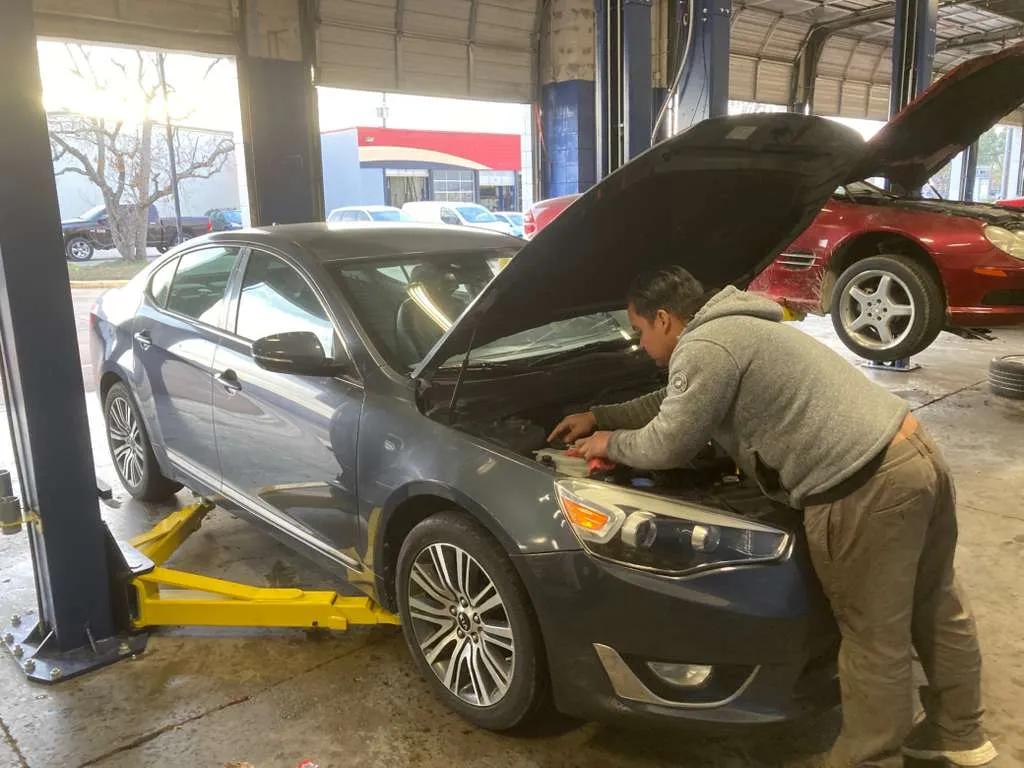
Best Auto Repair Shop Webster Texas
Quick Answer
A metallic engine rattle that gets louder under acceleration is usually one of three things: a worn drive belt tensioner, a loose or cracked exhaust heat shield, or internal engine knock from low oil pressure or bad fuel. The first two are common and inexpensive to fix if caught early. The third needs prompt attention. Bay Area Auto, a Best Auto Repair Shop Webster Texas drivers use for engine diagnostics, resolved this exact issue for a Webster customer in under two hours by isolating the sound with an electronic stethoscope before replacing anything.
Marcus wasn't looking for a mechanic that morning. He was looking for an explanation.
He'd pulled out of his driveway in Webster like any other Tuesday, coffee in the cupholder, radio low. About a block down the road, there it was — a sharp metallic rattle every time he pressed the gas. Not constant. Not at idle. Just there, right when he accelerated, like something loose was bouncing around under the hood.
He pulled back into the driveway, put the car in park, and revved it once just to check he wasn't imagining it. He wasn't. The rattle came right back, louder this time.
Most people don't panic over engine noises. They Google them first. So did Marcus, and what he found — and what happened next — is worth knowing before you decide whether to keep driving or pull over.
What a Rattling Engine Sound Usually Means
Not every rattle is an emergency, but every rattle is information. Your engine is telling you something changed.
A rattle that shows up only under acceleration is a different clue than one that happens at idle or on startup. Load-dependent noises point toward parts that move faster or work harder when the engine revs — belts, pulleys, and heat shields sit right in that category. A noise that persists at idle, by contrast, more often points toward internal valvetrain or oil-pressure issues.
That's the pattern Marcus described, and it's the same pattern that sends a lot of Webster drivers searching for a Best Auto Repair Shop Webster Texas residents actually trust with a real diagnosis, not a guess.
The Call Marcus and Eric
Marcus dialed the shop before he'd even finished his coffee. Eric, the customer care lead, picked up on the second ring.
Eric - Good morning, thanks for calling. This is Eric — how can I help you today?
Marcus - Hey, yeah, so my car started making this rattling sound out of nowhere. It only happens when I hit the gas. Idling, it's fine. But the second I accelerate, there's this metal-on-metal rattle.
Eric - Okay, that's helpful detail already. Does it happen every time you accelerate, or only past a certain speed?
Marcus - Every time, pretty much. Even just pulling out of my driveway.
Eric - Got it. And does the sound change at all if you turn the AC on, or does it stay the same?
Marcus - Actually — yeah, it seemed a little louder with the AC running, now that you mention it.
Eric - That's a useful clue. What's the mileage on the car right now, roughly?
Marcus - About 78,000.
Eric - Okay. Given what you're describing, I don't want you driving it any real distance until we've had eyes on it. I can get you in for a diagnostic slot this morning if that works — it's usually about an hour start to finish just for the inspection.
Marcus - That works. What should I expect when I get there?
Eric - Our technician will run the engine across different RPMs and isolate exactly where the sound is coming from. Once we know the cause, we'll walk you through the estimate before any repair work starts — nothing happens without you signing off first.
Marcus - Perfect. I'll head over now.
Eric booked the slot, gave Marcus the shop's address, and made a note for the technician: rattle under acceleration, worse with AC on, 78,000 miles. Small details, but the kind that save time once the car's actually up on the lift.
In the Bay Marcus and Adam
Marcus dropped the car off twenty minutes later. Adam, an ASE-certified technician, met him at the counter.
Adam - Hey Marcus, Eric passed along your notes — rattle on acceleration, a bit worse with the AC running. That's a good starting point. Mind if I take it back and run it through some RPM ranges first?
Marcus - Go for it. Let me know what you find.
Adam took the car into the bay, started the engine, and let it idle for a minute — nothing unusual. Then he brought the RPMs up gradually while running an electronic stethoscope along the front of the engine, listening for exactly where the sound peaked.
A few minutes later, he waved Marcus over.
Adam - So I found two things going on, not just one. First, your drive belt tensioner — the spring inside it that keeps the belt tight has worn down. Instead of holding steady, the belt's flopping around and slapping against a bracket every time the engine works harder.
Marcus - Okay, that explains the acceleration part. What's the second thing?
Adam - There's a heat shield near your exhaust manifold — thin metal that protects nearby parts from heat. One of its mounting brackets has cracked, so it's loose and buzzing at higher RPMs. That's probably what got louder with the AC on, since that puts a bit more load on the engine too.
Marcus - So two separate problems making basically one noise.
Adam - Exactly. It's a pretty common combination, honestly — which is why guessing at it usually leads to replacing the wrong part first. I'll put together the estimate now: new tensioner assembly, a fresh serpentine belt since the old one's been vibrating against those brackets, and stainless hardware to secure that heat shield properly.
Marcus - How long will that take?
Adam - Once you approve it, about an hour to an hour and a half.
Marcus - Let's do it.
Engine Repair Service in Webster, Texas shops that skip the listening step tend to swap parts on a guess and hope. Adam didn't guess — he traced the sound to its exact source before touching a single bolt.
The Repair and the Road Test
Adam got to work: removed the worn tensioner, installed a new OEM assembly, fitted a fresh serpentine belt, and bolted the heat shield down with stainless mounting hardware built to hold up against exhaust heat long-term. He torqued every fastener to factory spec and double-checked pulley alignment before calling it done.
Then came the part that actually matters — proving it.
Adam - I'm going to take it out for a real test drive, not just around the lot. Hard acceleration, some stop-and-go, AC running the whole time, since that's what triggered it before.
He drove Marcus's car through a mix of Webster side streets and a stretch of highway on-ramp, pushing it through the exact conditions that used to cause the rattle. Nothing. Quiet acceleration, smooth idle, no chatter even with the AC cranked.
Adam - It's clean. No rattle under any of the conditions you described. You're good to go.
Marcus picked up his keys a couple of hours after dropping them off, engine running quiet for the first time in days.
When a Rattling Noise Means Stop Driving
A rattle alone doesn't always mean pull over immediately, but a few signs do:
The noise is paired with a burning smell or visible smoke
Your temperature gauge is climbing
You notice a loss of power steering or the battery light comes on
If a belt tensioner fails completely, the belt can snap — and that belt often runs your power steering, alternator, and water pump. That's not a "drive it another week" situation. For general vehicle safety guidance, the National Highway Traffic Safety Administration (NHTSA) maintains public resources on routine maintenance warning signs — worth a look if you want a second, government-sourced reference point.
Frequently Asked Questions
Question 1: Why does my engine only rattle when I accelerate?
Answer 1: Acceleration puts more load on your engine's belts, pulleys, and heat shielding. A worn tensioner or a loose heat shield stays quiet at idle but starts vibrating once the engine works harder, which is why the noise shows up specifically when you press the gas.
Question 2: Is it safe to keep driving with a rattling engine?
Answer 2: It depends on the cause, but it's not something to ignore. If a belt tensioner is failing, the belt can snap without warning, which knocks out power steering and battery charging at the same time. Getting it checked before that happens is a lot cheaper than a roadside breakdown.
Question 3: How long does an engine rattle diagnosis and repair take in Webster, Texas?
Answer 3: A full diagnostic inspection typically takes about an hour. If the cause is a belt tensioner or heat shield issue, like in Marcus's case, the repair itself usually adds another one to two hours on top of that.
If your car is making a noise it didn't used to make, don't wait for it to get worse. Bay Area Auto can trace the exact cause and walk you through the fix before any work begins.
Bay Area Auto
📞 Call us: +1 346-447-7171
🌐 Visit: https://bayarea-auto.com/
📍 Address: 301 W Bay Area Blvd, Webster, TX 77598, United States
Our support team is available Monday through Saturday, 7:30 AM to 6:00 PM, to assist you quickly and efficiently.
Visit Bay Area Auto or call us for a professional engine inspection and misfire diagnosis.