

After Leaving an Office Meeting, Wilson Needed an Auto Repair Shop in Webster, Texas for an Unexpected Transmission Issue
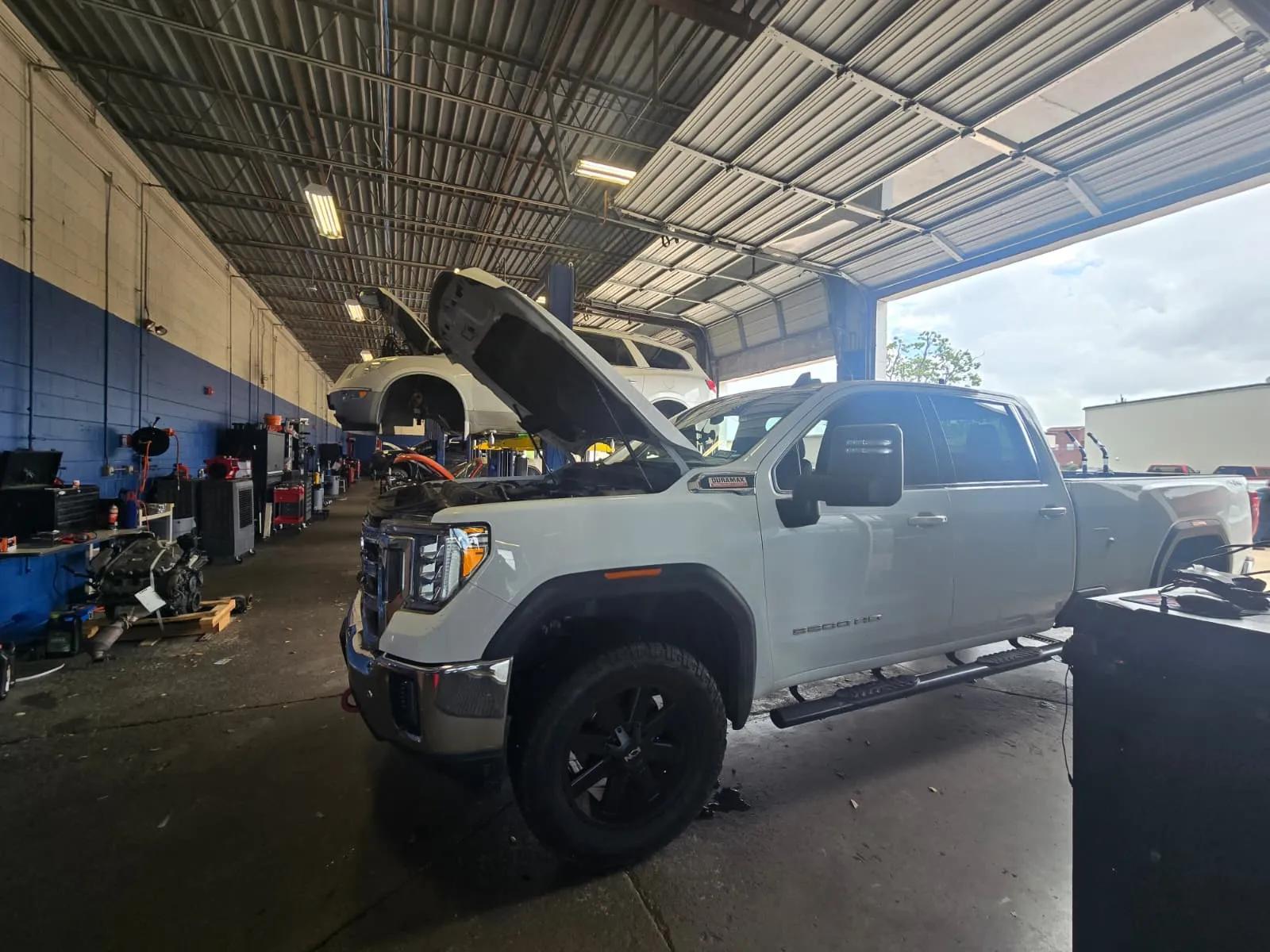
Transmission Repair Shop Webster, TX
Wilson Pruitt had just wrapped up a two-hour client meeting at his office near Bay Area Boulevard, the kind of meeting that ran fifteen minutes long and left him mentally cataloguing three follow-up emails he needed to send before the end of the day. He walked to his car in the parking lot thinking about none of those emails specifically anymore just about getting back to his desk.
He pulled out of the lot, merged onto the road, and within about ninety seconds, something was clearly wrong.
The car accelerated, but it felt wrong the engine revving noticeably higher than it should for the speed he was actually traveling. He glanced at the dashboard. The tachometer was climbing well past where it normally sat at this speed, and the car was simply not picking up speed the way the engine noise suggested it should be.
He eased off the accelerator, confused, and tried again. Same result. The transmission seemed to be stuck — refusing to shift into any gear higher than what felt like second, no matter how much throttle he applied.
Then a warning light appeared on the dashboard. Not the check engine light he half-recognized from years of driving a different icon, one shaped roughly like a gear with an exclamation mark, that he had genuinely never seen illuminated before in this car.
Wilson pulled into a parking lot off the main road, put the car in park, and sat there for a moment trying to process what had just happened. The car had been completely normal twenty minutes earlier. Now it would not drive properly at all, and he had no idea whether continuing to the office was safe, whether he needed a tow truck, or whether something catastrophic had just happened to his transmission in the middle of an ordinary Tuesday.
He searched on his phone for an Auto Repair Shop Webster, Texas that could help him understand what was happening before he made any decision about driving further.
What Wilson Found Before Calling
In the few minutes before he called, Wilson searched specifically for the warning symbol he had seen a gear icon with an exclamation point and found that it was commonly associated with something called "limp mode" or "limp home mode.
What he read explained, in general terms, that limp mode was a protective response built into a vehicle's transmission system when the transmission control module detects a fault or a reading that falls outside expected parameters, it restricts the transmission to a single low gear (or sometimes second gear) specifically to prevent further damage, while still allowing the driver to limp the car to safety rather than leaving them stranded with no movement at all.
This explained why the car was still drivable, just badly — limited to one low gear, with the high revving he had experienced being a direct consequence of being locked out of the higher gears the engine needed to reach normal cruising speed efficiently.
What the general search results did not tell him was what had actually triggered the fault in his specific car, or whether it was something serious. For that, he needed an actual diagnosis.
He called.
The Call with Eric
Eric answered, and Wilson described what had happened as precisely as he could — the sudden high revving, the inability to shift past what felt like a low gear, the warning light with the gear-and-exclamation-point icon, and the fact that this had started with absolutely no warning about ninety seconds after leaving his office.
Eric: That symbol and the symptoms you're describing are consistent with the transmission entering limp mode, which is the system's protective response to a detected fault. The good news, in a sense, is that limp mode existing at all means the system caught something and responded the way it's designed to — it's meant to prevent the kind of driving that would cause further damage, by restricting you to a single gear until the issue is addressed.
Wilson: Is it safe for me to drive it the rest of the way to the shop, or should I have it towed?
Eric: At low speed and short distance, driving in limp mode is generally considered safe — the system has specifically restricted the transmission to prevent damage, so as long as you're not pushing the engine hard or driving at highway speed, bringing it in directly is usually fine. I'd avoid highway driving in this condition, and if at any point you notice anything change — unusual noises, smells, or the car behaving differently than it currently is — pull over and call us back. But for a short, low-speed drive to the shop, you should be okay.
Wilson: What actually causes this? Is this likely something serious with the whole transmission, or could it be something smaller?
Eric: Limp mode itself doesn't tell us what the underlying cause is — it's the symptom of the protective system activating, not a diagnosis. The actual trigger could range from something relatively minor and inexpensive, like a faulty sensor sending the transmission control module bad data, to something more significant involving the transmission's internal components. We won't know which until we run a diagnostic scan and read the actual fault codes the system has logged. I don't want to guess at the cost or severity before we've actually looked.
Wilson appreciated that Eric did not immediately speculate about a worst-case cost, and drove carefully, at low speed, directly to the shop.
Wilson Arrives at the Auto Repair Shop Webster, Texas
When Wilson arrived, Eric connected a diagnostic scanner to the vehicle's onboard computer system before anything else, reading the stored diagnostic trouble codes related to the transmission control module.
Eric: Here's what the system logged. There's a code indicating an implausible or erratic signal from one of the vehicle speed sensors specifically the one that reports output shaft speed to the transmission control module. This sensor's job is to tell the module how fast the transmission's output shaft is actually turning, which the module uses, along with several other inputs, to determine when and how to shift gears.
Wilson: So the sensor itself failed, not the transmission?
Eric: That's what this code points toward, yes. When the transmission control module receives a signal from this sensor that doesn't make sense — for example, a reading that jumps erratically or doesn't match what the other sensors are reporting — the module can't reliably calculate the correct shift points anymore. Rather than risk shifting incorrectly, which could cause real damage, the system defaults into limp mode: locking into one gear it knows is safe, and alerting you with the warning light, until the conflicting signal is resolved.
Wilson: That's a relief to hear, if it's really just a sensor and not something happening inside the transmission itself.
Eric: I want to confirm that properly before I say it with full confidence — a faulty sensor reading is the most likely explanation given this specific code, but I want to physically inspect the sensor and its wiring, and check for any other codes that might point toward a related issue, before we finalize the diagnosis. Let me do that now.
What the Inspection Found
Eric located the output speed sensor, mounted on the transmission housing, and inspected both the sensor itself and the wiring harness connecting it to the transmission control module.
Eric: Found it. The connector at the sensor has some corrosion built up on the contacts, and the wiring insulation nearby shows some wear likely from years of heat cycling and vibration in that location, which is fairly normal for a vehicle of this age and mileage. This corrosion is creating an intermittent, unreliable connection, which explains the erratic signal the module was receiving. It's not a transmission internal fault. It's a sensor and connection issue.
Wilson: So this is a relatively simple fix?
Eric: Replacing the sensor and properly repairing the wiring connection is a straightforward repair — nothing inside the transmission itself needs to be opened up or serviced. I do want to mention one thing clearly: limp mode is a symptom of whatever triggered it, and in some other cases, the same warning light and limp mode behavior can be caused by more serious internal transmission faults. In your case, the diagnostic data and physical inspection both point clearly toward this sensor and connection issue as the actual cause, which is the more straightforward outcome, not the more serious one.
What Wilson Took Away From the Experience
When Wilson picked up the car, Eric provided a written summary of the diagnostic codes found, the specific sensor and wiring issue identified, and the repair performed.
Wilson: I genuinely thought, sitting in that parking lot an hour earlier, that I was looking at a transmission rebuild. The fact that it was a sensor is honestly hard to believe given how dramatic the symptom felt.
Eric: That disconnect is actually very common with limp mode specifically. The protective system is designed to respond decisively — locking you into one gear and lighting up a warning — precisely because the module can't be sure how serious the underlying issue is. It treats a sensor fault and a more serious internal fault with the same cautious response, because erring on the side of caution protects the transmission either way. The dramatic symptom doesn't necessarily mean a dramatic cause.
Wilson mentioned the experience to a colleague the following week, who had been driving with an illuminated check engine light for almost a month, assuming it was "probably nothing" since the car still drove normally.
Wilson: Get it scanned. It took less than twenty minutes for them to read the actual code on mine, and that's the difference between knowing what's wrong and just guessing.
Question: What is transmission limp mode and why does it happen?
Answer: Limp mode (also called limp home mode) is a protective function built into modern transmission control systems. When the transmission control module detects a sensor reading, fault, or condition that falls outside expected parameters, it restricts the transmission to a single low gear rather than risking a shift that could cause damage based on unreliable data. This allows the vehicle to still be driven, typically at reduced performance, to a safe location or repair shop rather than leaving the driver stranded.
Question: What causes a transmission to suddenly stop shifting properly and enter limp mode?
Answer: Causes range from relatively minor issues, such as a faulty speed sensor or a corroded wiring connection sending unreliable data to the transmission control module, to more significant internal transmission faults like solenoid failure or internal component wear. The same limp mode response and warning light can result from either category of cause, which is why a proper diagnostic scan combined with physical inspection is necessary to determine the actual severity before any repair work begins
Conclusion
The lesson is not that every limp mode situation resolves this simply. It's that the dramatic nature of the symptom doesn't tell you the severity of the cause — only a proper diagnostic scan does. A reliable Transmission Repair Shop Webster, TX reads the actual data before speculating about cost or scope, which is exactly what turned Wilson's parking-lot panic into a same-day fix.
Contact Bay Area Auto Today
Don't ignore the signs of transmission trouble. If you're experiencing rough shifting, slipping gears, delayed acceleration, transmission fluid leaks, or unusual noises while driving, have your vehicle inspected before minor issues turn into costly repairs.
📞 Call us: +1 346-342-4417
🌐 Visit: https://bayarea-auto.com/
📍 Address: 301 W Bay Area Blvd, Webster, TX 77598, United States
Whether you need a transmission inspection, fluid service, diagnostics, rebuild, or complete transmission repair, the experienced technicians at Bay Area Auto are ready to help. We'll accurately diagnose the issue, recommend the right solution, and get your vehicle back on the road with confidence. Our team is committed to providing fast, reliable, and professional transmission repair services in Webster, TX.